
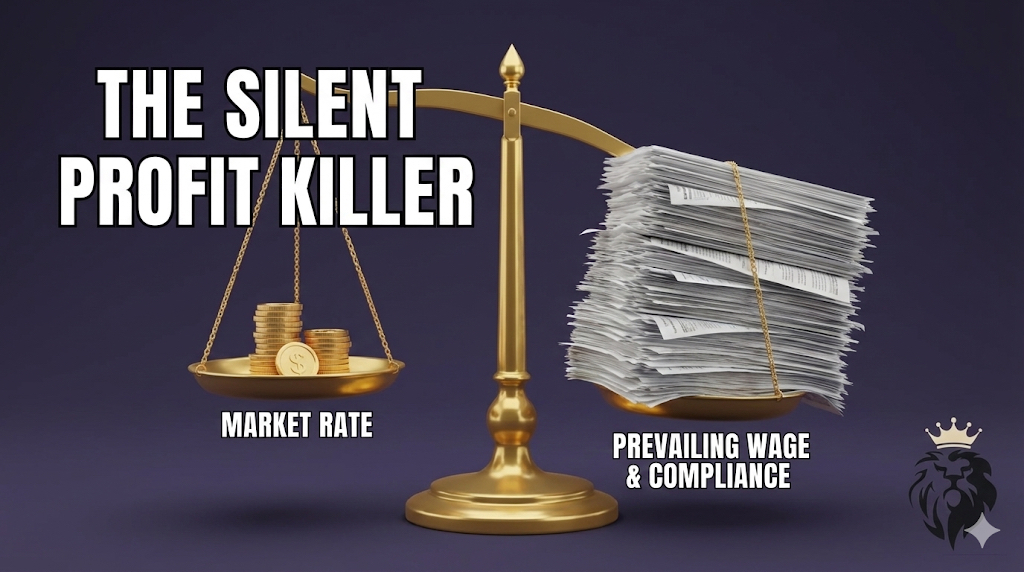
Prevailing Wage vs. Market Rate
The allure of a substantial contract with the San Diego Unified School District or a local municipality is undeniable. It promises guaranteed payment and steady volume. Yet, for many HVAC small businesses, winning that first prime contract is the beginning of a financial crisis.
The reason? A fundamental misunderstanding of Prevailing Wage (California DIR) and Davis-Bacon (Federal) labor rates.
The Math of Disaster
In the private sector, your bid is based on your market labor rate. It is $35 to $45 an hour for a lead technician. In the public sector, you do not set the rate; the government does. If the DIR classification for a specific site dictates a rate of $68/hour plus significant fringe benefits, your profit margin quickly disappears. This happens if you bid based on your standard rate. This occurs instantly as soon as your crew steps on site.
The Administrative Burden
Beyond the hourly rate, the administrative cost of compliance is steep. Weekly Certified Payroll Reports are mandatory. One error in these reports can freeze your payments. It can also lead to penalties that far exceed the profit of the job.
Strategic Takeaway
Government contracting is not just about moving air; it is about managing data. Before you bid, you must calculate your “Burdened Labor Rate” specifically for the relevant wage determination. If your back office isn’t built to handle the paperwork, the contract isn’t an asset; it’s a liability.
Leave a Reply